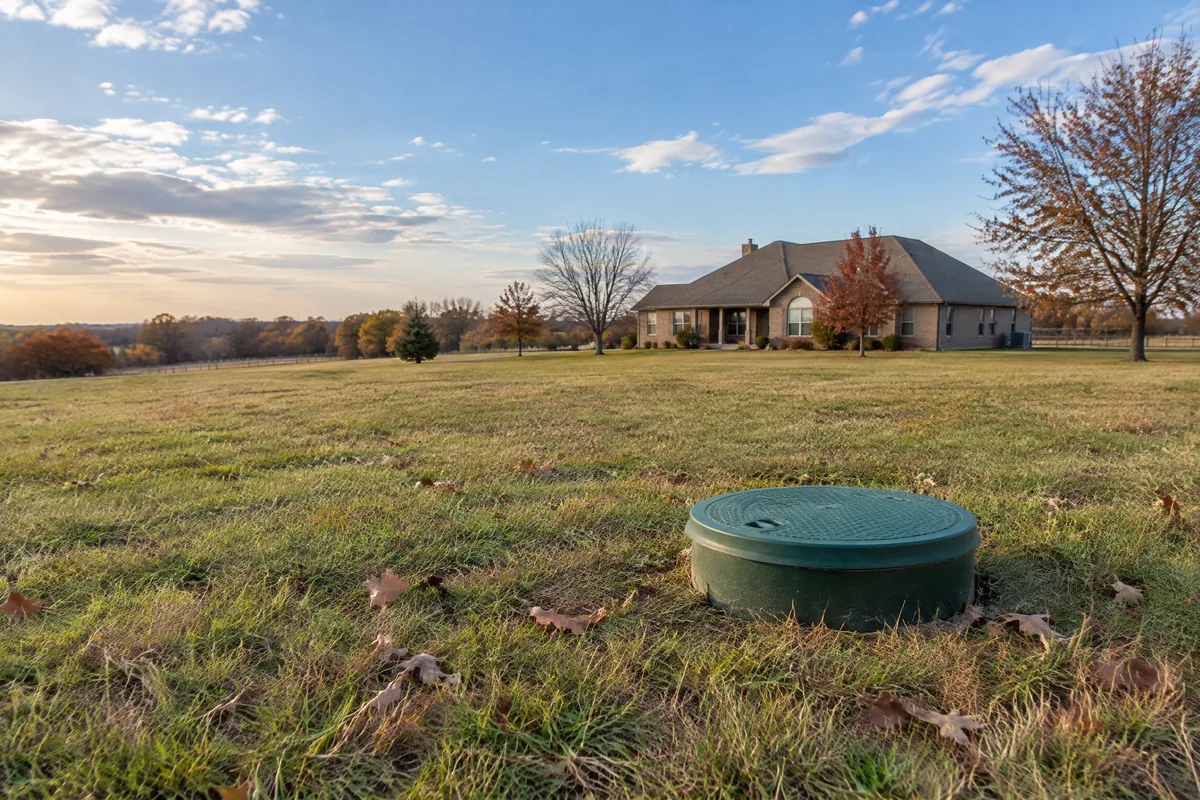
A seller points toward an open stretch of lawn and says the septic tank is somewhere underneath. For a buyer considering a Guthrie property, that is useful location information, but it is not the same as inspection access. Buried tank lids create a specific limitation: an inspector may have records and visible field conditions to review without being able to observe the tank components concealed below them.
Gather location clues before the appointment
Ask the owner for a system diagram, installation records, pumping receipts, and any photographs taken during previous service. A receipt may identify the contractor who last accessed the tank; a photograph may show a lid's position relative to the house. Share these materials before the visit rather than leaving them in a folder on inspection day.
Oklahoma State University Extension identifies installation records as a useful source of system type and component locations. However, an old drawing is background information, not confirmation of today's condition. Tell the inspector if landscaping, paving, or other yard changes have occurred since the drawing was made.
Knowing the location does not make a lid accessible
Redbud Property Inspections' conventional septic inspection reviews available records, accessible components, and visible absorption or lateral field conditions. Excavating buried lids is not included. A tank marked on a drawing can still remain inaccessible beneath soil, landscaping, or another obstruction.
Confirm what access preparation actually means
Before arranging work, ask which access points are needed and whether a septic contractor should locate and expose them. Do not assume that uncovering one lid will make every relevant component observable. Coordinate the proposed work with the property owner and inspection team so everyone understands what will be available at the appointment.
Leave locating, excavation, and lid handling to an appropriate septic professional. Do not lift a lid yourself or leave an opening unsecured. Tank openings present fall hazards, and fumes can be dangerous.
A field walkover provides evidence, not a lifespan estimate
Even when lids remain buried, walking the identified absorption area can reveal visible saturation, standing water, settlement, or unusual drainage conditions that merit contractor evaluation. Ground conditions and recent rainfall provide context for those observations. A wet patch alone does not establish its source, and a dry lawn does not establish that concealed components are sound.
Surface observations cannot determine the system's remaining useful life or establish its treatment capacity. They also do not reveal tank interior conditions or the condition of every buried lateral. If the home's occupancy or water use has changed, share that history rather than expecting the appearance of the yard to answer capacity questions.
For a Guthrie acreage purchase, keep the distinction clear: describing what was visible across the field is different from verifying everything underground.
Arrange separate access work without confusing the services
If important components cannot be observed, ask about septic-contractor evaluation and whether another inspection visit would be useful after access is established. Discuss permission, timing, and any separate charges before the original appointment. Excavation, pumping, maintenance, and inspection are different tasks; arranging one does not automatically include the others.
The house's drain line presents another access question. Our discussion of cleanout access for sewer scopes in Yukon explains why a suitable camera entry point matters. A drain-line camera view does not replace access to septic tank components or evaluate the entire absorption field.
If records instead identify an aerobic system, review alarm history and service records for Tuttle aerobic inspections. Those mechanical-system questions require a different inspection scope.
Keep unresolved access limitations visible in your planning
Read the report for the components observed, the areas not accessible, and the recommended follow-up. Ask for clarification if “tank location identified” sounds like “tank inspected”; those statements describe different levels of information. Missing access is an unresolved condition, not evidence that the tank has either passed or failed.
Our conventional versus aerobic septic overview helps clarify service selection. For home inspections in Guthrie, send the system records and explain any buried-lid concerns when you schedule with Redbud Property Inspections. Early communication gives you time to coordinate access and understand what questions may remain after the visit.