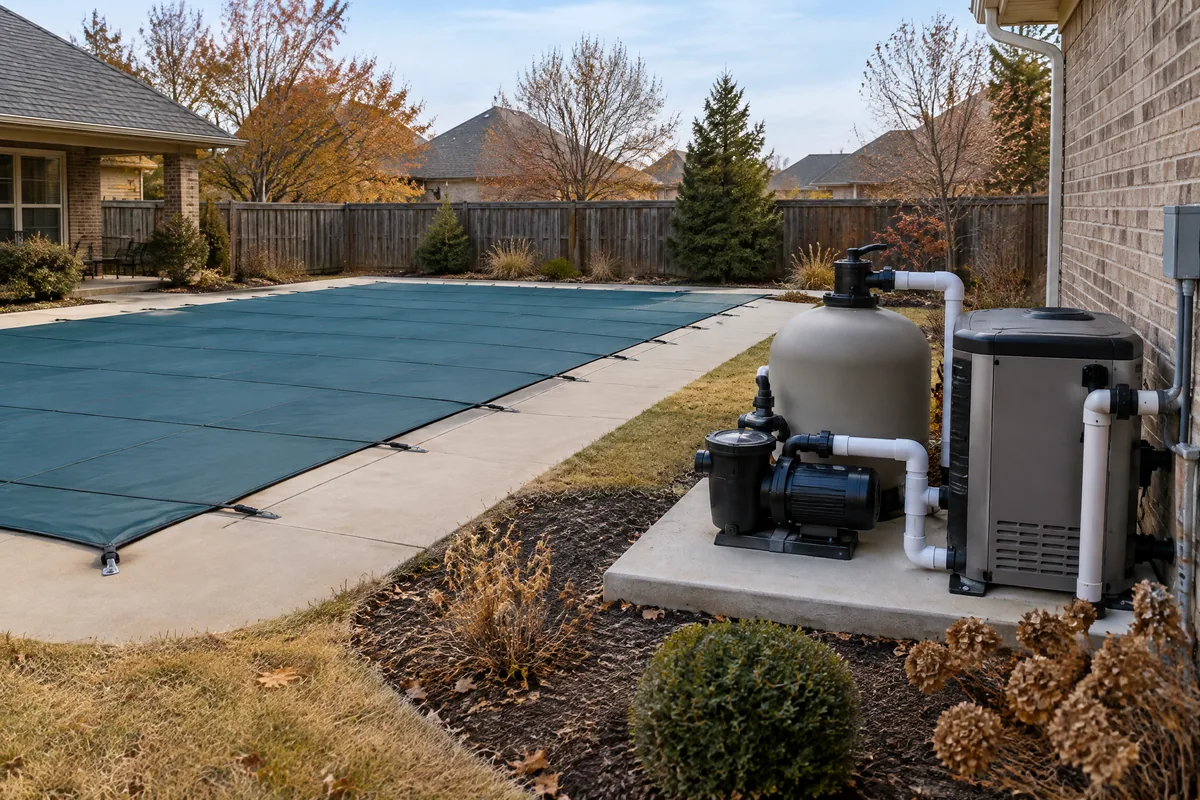
A covered pool at a November showing in Bixby presents a different inspection question from a pool circulating water in July. The equipment may have been deliberately drained and disconnected, while the cover conceals surfaces a buyer wants evaluated. Those conditions change what can be documented; they do not establish whether the system is sound or defective.
For a winter purchase, the useful goal is to separate visible findings from functions that remain untested. Redbud Property Inspections offers pool and spa inspections that review accessible components and operation when conditions allow. Knowing the shutdown status before the appointment helps set realistic expectations.
Confirm the shutdown before the visit
Ask the owner whether the pool, attached spa, and individual equipment have been winterized. A covered pool does not necessarily mean everything is shut down, and a spa may have a different operating status from the pool. Share the closing date and the pool contractor's contact information, if available.
Winterization can involve more than switching off a pump. Pentair's winterization guidance describes draining equipment and protecting plumbing with winter plugs. An inspector should not disturb that arrangement simply to obtain an operational observation.
Do not energize shut-down equipment, change valves, or remove plugs yourself for the appointment. Pentair's SuperFlo pump manual warns that dry operation can damage the pump's mechanical seal. A warm afternoon does not make a drained system ready to run.
Plan cover and equipment access without improvising
Tell the inspection team what type of cover is installed and whether the owner has arranged authorized access. Removing a cover may require a pool contractor and coordination with the owner; do not assume removal is included. Never walk on a cover to reach another area.
Keep the route to the equipment pad clear of stored furniture and yard items. Arrange access to locked gates or equipment enclosures without opening electrical cabinets yourself. If a cover remains in place, submerged shell surfaces, fittings, and drains may be concealed. The report should explain those limitations rather than treat covered areas as inspected.
Understand what a shut-down system can reveal
Accessible coping, deck surfaces, drainage conditions, equipment housings, and visible plumbing can still provide useful information. Visible electrical bonding and safety components may also be observed within the inspection scope. These observations matter even when circulation cannot be checked.
However, a stationary pump cannot demonstrate circulation performance. A drained filter does not show its operating pressure, and an inactive heater cannot demonstrate heating. Water features and spa jets may likewise remain untested. The absence of a visible leak at idle does not establish that plumbing is leak-free under operation, particularly where lines are buried.
For example, “heater not operated because winterized” describes an inspection limitation, not a finding that the heater has failed. Keep that distinction in mind when reviewing recommendations.
This distinction also applies to other seasonal outdoor equipment. Our discussion of cold-weather irrigation inspection limitations explains why unavailable operation needs documentation, not an assumed pass.
Gather records that explain the last operating season
Request the closing invoice, equipment replacement receipts, and available service notes. Look for information identifying which components were drained or removed and whether a problem was reported before shutdown. A receipt showing winterization is useful context, but it is not proof that every component works or that freeze damage cannot occur.
Bring dated observations, not just reassurance
Notes about a heater that stopped intermittently, repeated refilling, or unusual pump noise give a contractor specific questions to investigate. Include dates and photographs when available. The recordkeeping approach in our seasonal observation log article is useful here too: observations from occupied seasons can supplement what is visible today.
Arrange follow-up around the unanswered questions
After reviewing the report, ask an appropriate pool contractor about unresolved operation or concealed conditions. Any reopening should follow the installed equipment's instructions and the owner's authorization. Clarify who will arrange evaluation and whether conditions allow it before your purchase timeline ends.
A winter inspection is not leak detection, a safety certification, or a guarantee of spring performance. For broader scope, read our Oklahoma pool inspection overview. When arranging a Bixby home inspection, mention the pool's current status. Schedule with Redbud Property Inspections and identify winterization and access arrangements in advance.