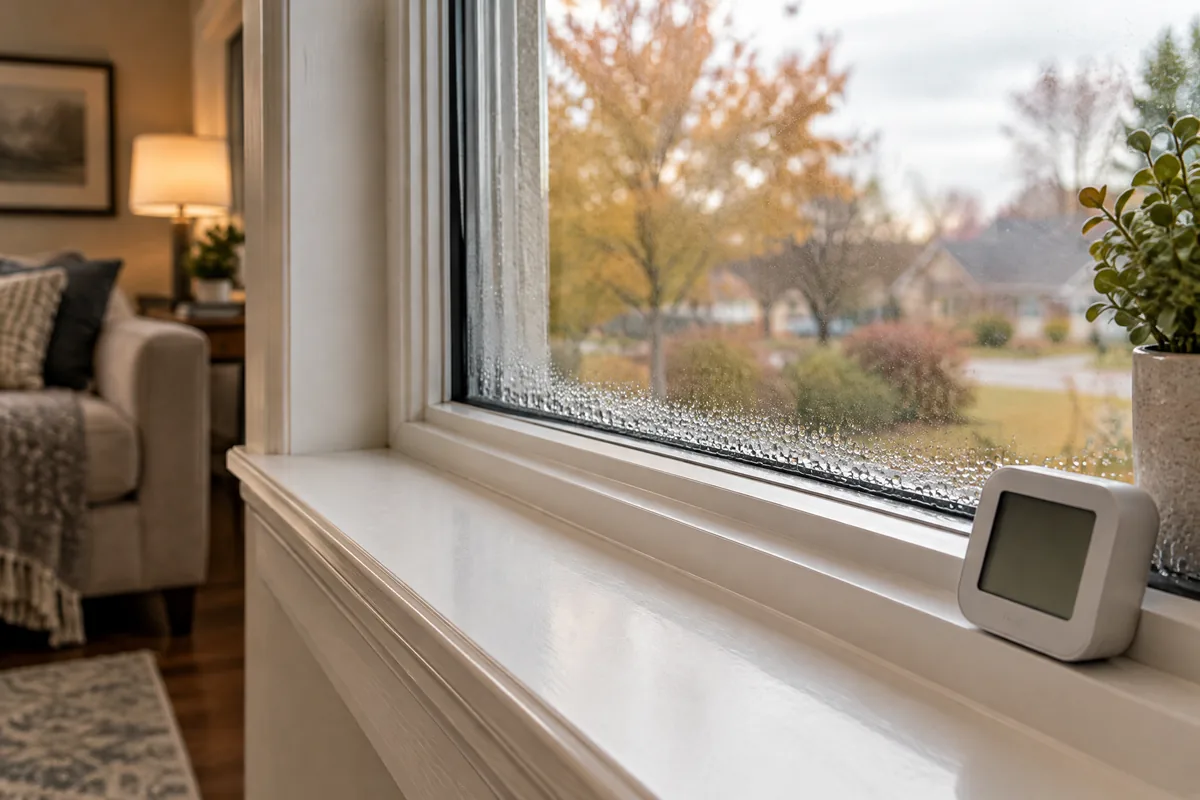
Small beads of water along a living-room window can look alarming during a Broken Arrow home showing. They tell you that moisture is present, but not whether mold is growing or rain is entering the wall. Before ordering a test, identify where the water appears and when it returns. Those details give a mold inspection a more useful starting point.
Locate the moisture before naming the problem
Condensation forms when humid air contacts a sufficiently cold surface. The EPA explains this moisture mechanism, which can make the room-facing surface of cold window glass wet even without an exterior leak.
Look from an accessible position: are droplets on the indoor glass, or is the surrounding trim stained? Is the sill wet while the wall below appears dry? Describe what you can see rather than labeling everything around the window “mold.” Discoloration alone does not establish fungal growth, and color cannot identify a mold species. Repeated moisture deserves attention, but neither a dark mark nor a clear droplet establishes the full condition of concealed materials.
Compare cold mornings with rainy days
Timing helps separate possible explanations without proving one. Beads that appear on several windows after a cold night suggest a different inquiry from damp trim at one opening after rain. Condensation and water intrusion can also occur together, so one explanation should not automatically rule out the other.
For a Broken Arrow buyer, ask whether the seller has dated photographs or observations from earlier weather conditions. Note whether the moisture appears before sunrise, after showers or cooking, or during rainfall. A dry afternoon showing cannot recreate every overnight condition. Likewise, an inspector finding dry materials on appointment day cannot establish that the area never gets wet.
Add humidity and ventilation context
A room hygrometer measures relative humidity, not mold. Its reading can help describe the indoor conditions alongside the window observation. Record the room, time, and temperature if available; a single reading is not a whole-house history.
The EPA's household moisture guidance recommends keeping relative humidity below 60 percent, ideally between 30 and 50 percent when possible. That is moisture-control guidance, not a threshold that proves a home is mold-free. Cold surface temperatures still matter. Tell the inspector about humidifier use and whether bathroom or kitchen exhaust equipment was operating when the condensation appeared.
Keep other testing conditions intact
If radon testing overlaps the visit, do not change window-opening habits without checking the test instructions. Our guide to heating-season radon test preparation explains why building conditions matter. A gas-log fireplace raises a separate venting question; the discussion of gas logs and Level 2 chimney inspections helps distinguish that system evaluation from a moisture observation. Window beads alone cannot evaluate fireplace venting.
Choose an inspection that follows the clue
Redbud Property Inspections offers Mold Inspection & Testing as a visual, non-invasive evaluation of accessible conditions, with moisture observations and sampling when included in the selected scope. For recurring window moisture, describe the affected opening and surrounding materials so the appointment addresses the building question, not just a request for an air sample.
Testing-only Indoor Air Quality Testing for Mold does not include the same visual investigation. Our explanation of mold inspection versus indoor air quality testing details that distinction. Sampling is not automatically necessary: EPA notes that visible mold growth generally does not require sampling. A sample also cannot locate every moisture source or guarantee the absence of concealed growth. CDC guidance on mold testing explains why short-term air results cannot establish health risk.
Bring a window-focused record to the appointment
Prepare a few dated photos showing the glass, sill, adjacent trim, and nearby wall without disturbing materials. Share any known window replacement dates, prior water events, or contractor evaluations. Make the affected area accessible with the property owner's permission; do not remove trim or open walls to prepare for a non-invasive inspection.
For home inspections in Broken Arrow, a clear description of recurring moisture helps connect the concern to the appropriate service. Schedule with Redbud Property Inspections and include the window location and timing in your notes. The goal is a documented moisture inquiry, not a diagnosis made from condensation alone.