Before a 48-hour radon test begins in an Edmond home, decide who will keep the testing conditions consistent. A seller may close every window, only for a showing visitor to open one the next afternoon. During heating season, the practical challenge is not making the house unusually airtight. It is keeping ordinary heating and daily access compatible with the tester’s instructions from preparation through pickup.
Start closed-building preparation before the appointment
Redbud Property Inspections provides radon testing using an Airthings Corentium Pro continuous monitor over a 48-hour short-term test period. That measurement window is separate from the preparation time.
The EPA’s radon testing checklist calls for closed-building conditions at least 12 hours before a two-to-four-day test and throughout the test itself. For an Edmond appointment starting Friday morning, preparation therefore needs to begin Thursday evening, at the time confirmed by your tester.
Arrange setup and retrieval access in advance. Give the written instructions to the seller, household members, and agents coordinating showings. Anyone visiting during the measurement period should know that the home is being tested, even if they never enter the monitor’s room.
Keep windows closed without stopping daily life
Closed-building conditions mean keeping all windows closed and exterior doors closed except for normal entry and exit. You can still leave for work, bring in groceries, and return home. Avoid propping an exterior door open for a delivery or leaving a window cracked overnight.
Tell the tester about equipment that brings outdoor air indoors. Whole-house fans and ventilation controls need specific attention; do not guess about unfamiliar settings. EPA allows small exhaust fans to operate briefly, so ordinary bathroom use does not mean the household must abandon its routine. Follow the supplied instructions rather than creating your own ventilation rules.
Record condensation instead of airing out the room
If a closed window develops condensation, opening it to clear the glass changes the testing conditions. Note where and when moisture appears and discuss it separately. Our guide to window condensation and mold inspection explains why that observation is a moisture clue, not a diagnosis. A radon measurement does not evaluate mold.
Run the heating system normally
EPA guidance says to operate the home’s heating and cooling systems normally during the test. Do not turn the furnace off, dramatically change the thermostat schedule, or add temporary heating just to influence the reading. If the home is vacant or the heating system is not operating, tell Redbud before setup so the test conditions can be discussed.
Mention any installed radon-reduction system; its fan should remain operating during testing. Also ask about fireplace use if it is part of your heating-season routine. A radon test does not assess fireplace venting. For a separate concern about gas logs or a conversion history, the discussion of gas-log fireplaces and Level 2 chimney inspection helps frame that different question.
Leave the monitor and its surroundings alone
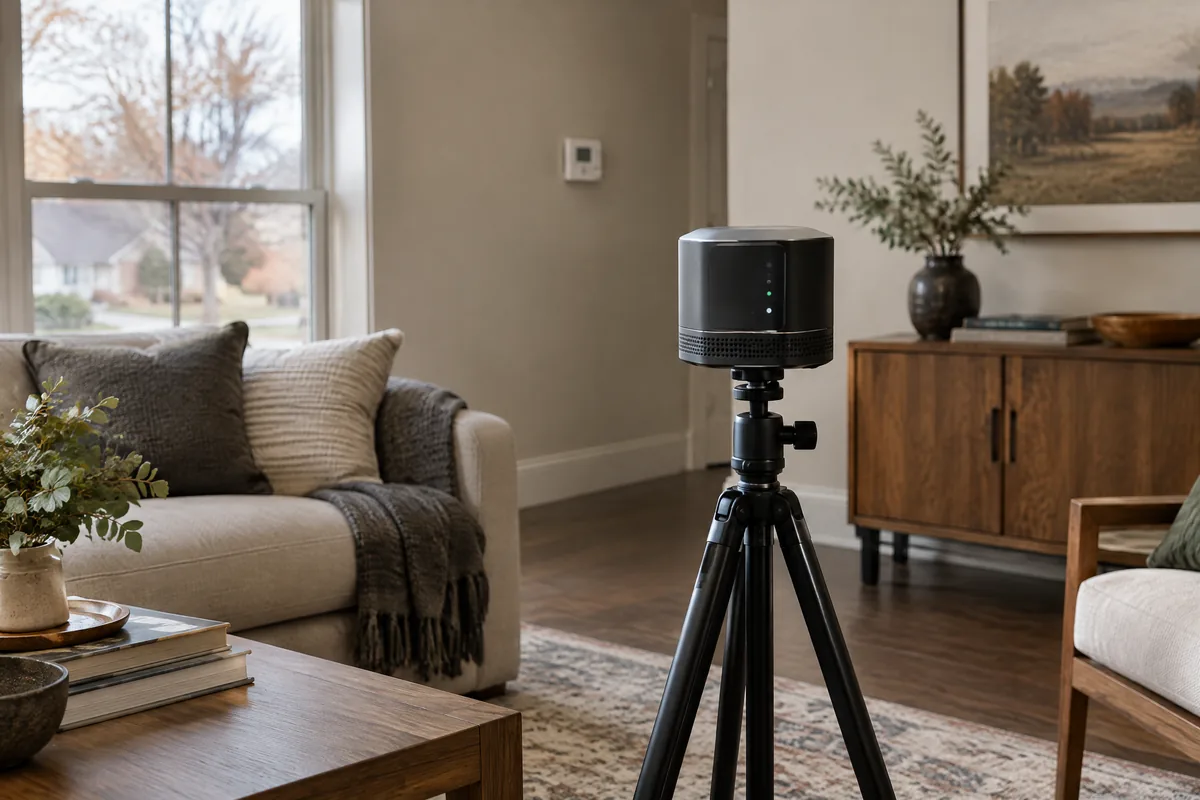
Let the inspector select the monitor location. Once testing starts, do not relocate, unplug, cover, or handle the device. Keep children, pets, cleaners, and visitors from disturbing it. Moving furniture or placing a portable fan beside the monitor can change its immediate surroundings.
If a window is accidentally opened or equipment is disturbed, record the approximate time and tell the tester promptly. Do not conceal the interruption or restart anything yourself. Interference can invalidate a test; the tester should evaluate whether another measurement is needed. Severe storms or high winds may also affect scheduling for a short test, so communicate rather than assuming the appointment must proceed unchanged.
Read the result as a short-term measurement
The reported average describes the measurement period, not every season ahead. EPA explains that radon varies from day to day and season to season; longer testing is more likely to reflect a year-round average. A low short-term result is not a permanent safety certification.
For broader context, read radon testing for Oklahoma homebuyers. Redbud tests and reports but does not perform mitigation. Ask about any recommended follow-up when reviewing your result.
Coordinating a test with an Edmond home inspection? Schedule with Redbud Property Inspections and confirm the preparation start time with everyone who has access to the home.